Power & Batteries
Why Mains Electricity Alternates And Devices Do Not
The supply reverses direction many times a second for reasons of transmission efficiency, while almost every device inside your home needs steady current and has to convert it.

Every socket in a house supplies current that reverses direction constantly, and nearly every device plugged into one immediately undoes that. The mismatch is historical and still justified.
Transmission favours high voltage
Losses in a cable depend on the current flowing, not the voltage. Delivering the same power at a higher voltage means less current and dramatically lower losses.
Generating at a usable voltage and transmitting at a very high one therefore requires a way to change voltage efficiently between the two.
A transformer does exactly that, with no moving parts and very little loss, but it only works with a changing current. That requirement is why the grid alternates.
Frequency is a compromise nobody revisited
The rate of alternation had to be high enough that lighting did not visibly flicker and transformers could be reasonably small, and low enough to limit losses.
Different regions settled on different values, and once infrastructure and appliances existed the choice became permanent regardless of merit.
The frequency is now also a signal in its own right. Generation and demand must match exactly, and any imbalance shows up immediately as the frequency drifting.
Electronics need something completely different
Semiconductors require a steady voltage in one direction. A supply that crosses zero and reverses many times a second is unusable to them directly.
Every powered device therefore contains a rectifier to make the current one-directional, and capacitors to smooth the resulting bumps into something approximately flat.
Heating elements and simple motors are the exceptions. They do not care about direction, which is why a kettle needs no electronics at all.
Direct current returned at the edges
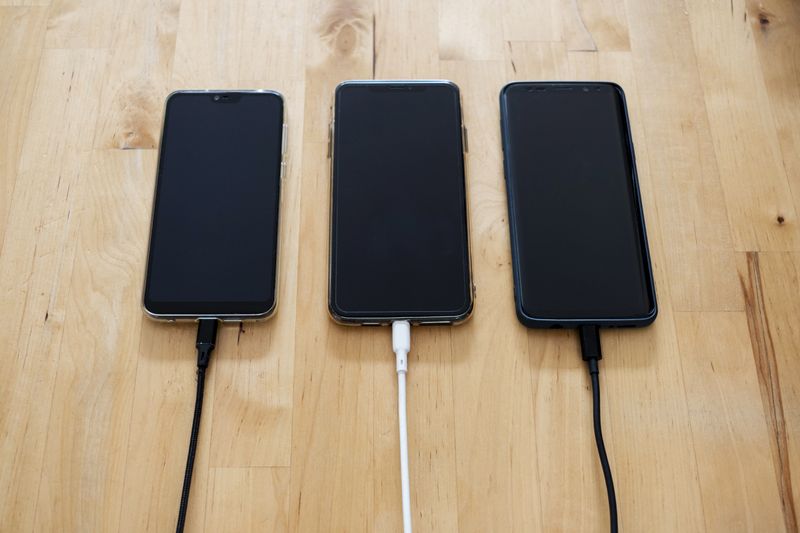
Solar panels, batteries and every device that charges over a cable are natively direct current. A modern home converts in both directions repeatedly.
Panels produce direct current which is inverted to alternating for the house, and then converted back inside each device. Each step costs a little energy.
Low-voltage direct current distribution in buildings is periodically proposed for this reason, and repeatedly loses to the enormous installed base of alternating equipment.
The waveform quality matters more than expected
Devices assume a smooth wave. Cheap inverters approximate it with steps, and some equipment runs hot, hums or misbehaves on that supply.
Meanwhile, the switching power supplies inside devices draw current in sharp pulses near the peaks rather than smoothly, which distorts the waveform for everyone on the circuit.
Power factor correction inside larger supplies exists to reduce that distortion. It benefits the network rather than the device that contains it.
Questions readers ask
Will supercapacitors replace batteries?
Not for storing energy over hours. The mechanism stores far less per kilogram, and that is a physical property rather than an engineering gap.
Are they dangerous?
A charged one can deliver an enormous short-circuit current very quickly, so handling terminals carelessly is the main hazard.