Power & Batteries
Why a smoke alarm suits a disposable cell and a camera flash does not
Single-use and rechargeable chemistries fail in opposite ways. One leaks its charge away over months, the other leaks its contents over years.
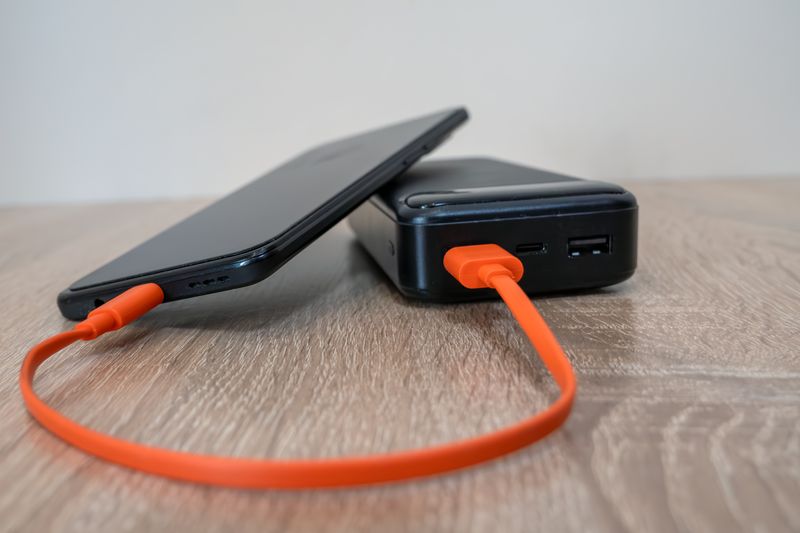
Most explanations of primary cells stop at the point where it starts to matter. This one carries on.
The short version
- Self-discharge decides whether a cell is still useful after a year in a drawer.
- Alkaline voltage falls steadily while most rechargeables hold a flat plateau.
- Leakage happens as an exhausted alkaline cell generates gas internally.
Two chemistries built for two different jobs
A single-use cell is designed to be manufactured full and to hold that charge for years without any attention. A rechargeable cell is designed to accept charge repeatedly, which requires reactions that can be driven backwards without destroying the electrodes.
Reversibility has a cost, because the same mobility that lets a reaction run backwards also lets it drift when nothing is happening. That is why the two behave so differently in storage even when their capacity on paper appears broadly similar. Neither is a better cell in the abstract; they solve different problems and fail in almost opposite circumstances.
Self-discharge is the deciding property
Every cell loses charge slowly through internal reactions, and the rate varies enormously between chemistries and with temperature. A good single-use cell loses a small fraction per year, which is why a torch in a drawer still works after a long gap. Older rechargeable chemistries lost a noticeable fraction every month, so a charged pack left alone was flat when it was needed.
For a device that draws almost nothing and must work in an emergency, self-discharge dominates every other consideration. This is exactly the profile of a smoke alarm, a remote control or an emergency torch that is never switched on.
The voltage curve changes what a device thinks
An alkaline cell begins near its nominal voltage and falls steadily throughout its life, ending well below where it started. Common rechargeable chemistries sit at a slightly lower voltage but hold it almost flat until they are nearly exhausted.
Mechanically, devices that estimate remaining charge from voltage therefore misjudge rechargeables, often reporting full until they abruptly report empty. Devices designed around a falling alkaline curve may also refuse to start on a rechargeable that never reaches the expected voltage. That mismatch, rather than any lack of capacity, is why some equipment behaves oddly on otherwise perfectly good rechargeable cells.
High drain separates them sharply
Delivering a large current briefly, as a camera flash or a motor does, demands low internal resistance from the cell. Alkaline cells have relatively high internal resistance, so their voltage sags under heavy load and recovers when the load is removed.
Mechanically, that recovery is why a device declares an alkaline cell dead, then works again briefly after being left alone for a while. Rechargeable cells generally have much lower internal resistance and hold their voltage under heavy load without that sagging.
For anything that draws hard and often, the rechargeable delivers more usable energy even where the paper capacity looks lower.
Leakage is a chemical event, not a manufacturing fault
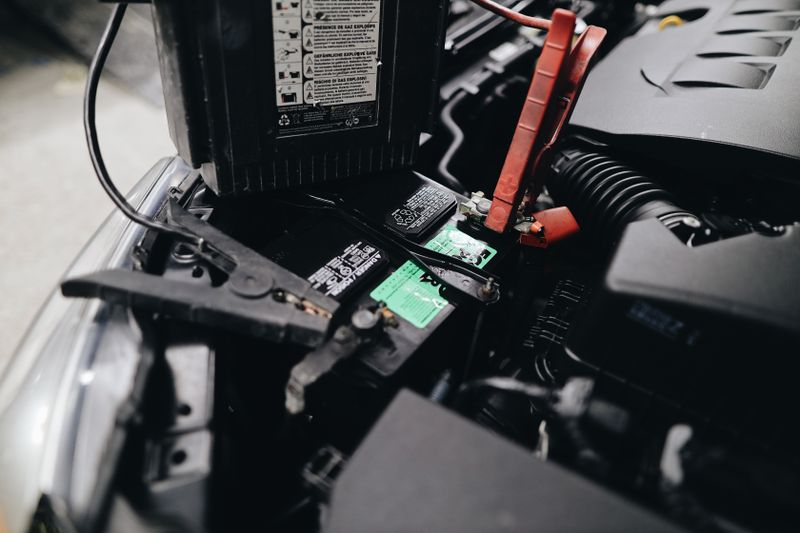
An exhausted alkaline cell continues reacting internally and can generate hydrogen, which raises pressure inside the case. The seal is designed to vent rather than burst, so electrolyte escapes and crystallises around the terminals as a white growth. That material is corrosive and attacks contacts, spring terminals and circuit boards, which frequently destroys the device outright.
The risk rises once a cell is flat, which is why leaving exhausted cells in a device is far worse than leaving fresh ones. Mixing old and new cells accelerates it, because the stronger cells drive the weakest one past exhaustion and into reversal.
Matching the chemistry to the drain pattern
Devices that sip current for years and must be dependable are suited to a chemistry that stores well and leaks slowly. Devices that gulp current in bursts and get used regularly suit a chemistry that delivers hard and gets charged again soon. Low self-discharge rechargeables changed the picture considerably, because they hold most of their charge over long idle periods.
They still sit at a lower voltage, so devices with a voltage-based low battery warning may complain earlier than expected. Removing cells entirely from equipment stored for a season avoids both leakage and slow discharge with no chemistry required.
The takeaway
Ask how the device draws power, and the chemistry chooses itself.
Once you know what it is trading away, the design stops looking arbitrary.
Questions readers ask
Can I recharge a disposable cell?
The reactions are not designed to reverse. Attempting it generates heat and gas inside a case that has no charging vent.
Why did my cells leak while still in date?
Dates describe expected shelf life, not immunity. A cell driven flat inside a device, or stored warm, can vent well before that date.