Power & Batteries
A Power Strip Adds Sockets And Not Capacity
Extending a socket multiplies the places to plug in but shares one fixed current limit, and the failure point is usually the connection rather than the cable.

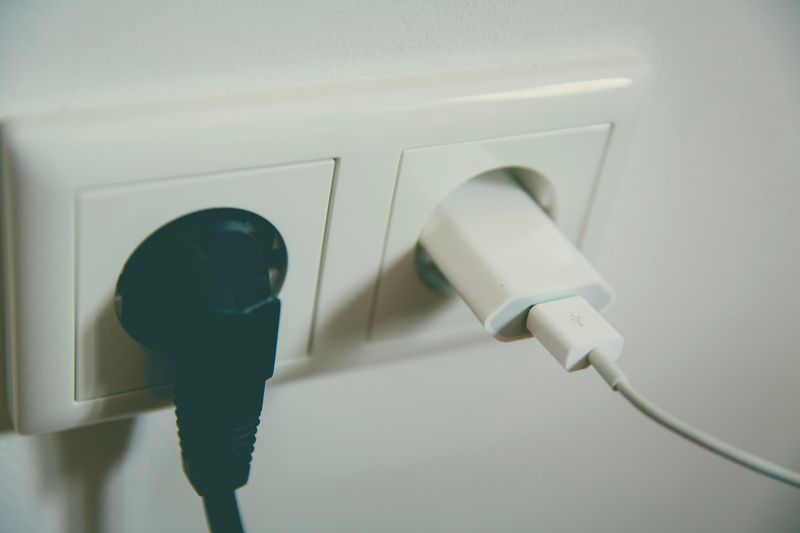
Plugging a strip into a wall socket turns one outlet into several. What it does not do is create any additional capacity behind them.
The circuit sets the limit, not the strip
A socket is fed by a circuit protected at a fixed current. Everything drawing from that circuit shares the same allowance regardless of how it is divided up.
The strip's own cable and plug add a second, usually lower limit. Both must be respected, and the strip is normally the smaller of the two.
This is why the rating printed on a strip is a total across all its outlets. Six sockets do not mean six times anything.
Heating loads are the ones that matter
Electronics draw very little. A collection of chargers, a router and a television together usually amount to a small fraction of the allowance.
Anything producing heat is in a different class entirely. Heaters, kettles, irons and washing machines can each approach the full rating of a domestic circuit alone.
Nearly every strip overload involves at least one heating appliance, which is why manufacturers single them out rather than warning about device counts.
Resistance concentrates at the contacts
Heat in a cable is spread along its length. Heat at a connection is concentrated at a point where a spring contact grips a pin.
Contacts that have loosened through repeated use, or that were poorly made, present a higher resistance and warm noticeably under load.
Warmth raises resistance slightly further, which produces more heat. That feedback is why a failing socket can degrade quickly once it starts.
Chaining strips multiplies the weak points
Each strip plugged into another adds a plug, a socket and a length of thin cable to the path, and the whole chain still shares one circuit allowance.
Every added junction is another place resistance can develop, and the load on the first strip is now the sum of everything downstream.
Extension leads left coiled add a further complication, since a coiled cable cannot shed heat and can reach a damaging temperature well below its rated current.
Surge protection is a separate and finite feature
Strips advertising surge protection contain components that conduct when voltage spikes, diverting the excess away from connected equipment.
Those components degrade with each event absorbed. A strip that has done its job for years may no longer protect anything while looking identical.
Some include an indicator that reports whether the protection remains intact. Without one, the only honest assumption is that an old strip is now simply a set of sockets.
Questions readers ask
Will supercapacitors replace batteries?
Not for storing energy over hours. The mechanism stores far less per kilogram, and that is a physical property rather than an engineering gap.
Are they dangerous?
A charged one can deliver an enormous short-circuit current very quickly, so handling terminals carelessly is the main hazard.