Power & Batteries
A charging cable is a resistor you chose without noticing
Every conductor drops a little voltage, and at the currents modern devices draw, a little is enough to change how fast anything charges.
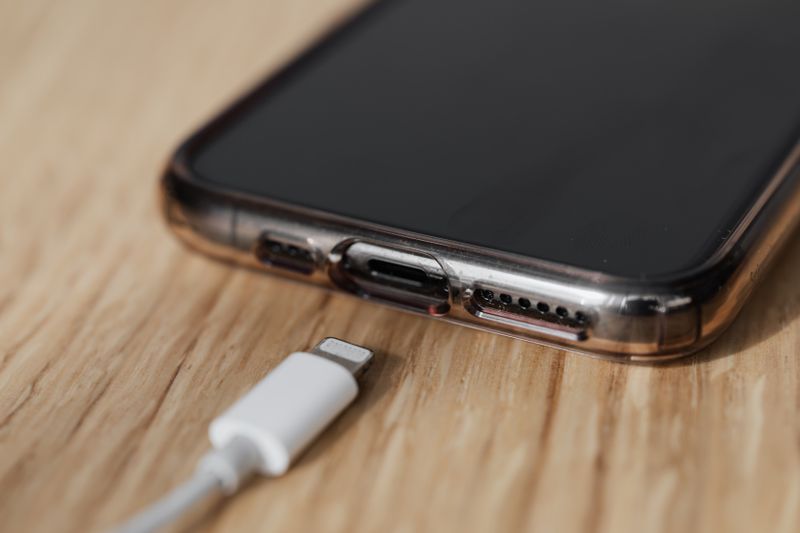
Everything here earned its place by changing an outcome. Nothing about cable resistance is included to round the number up.
What matters most
- Voltage lost in a cable rises with current and with length.
- The energy lost in the cable leaves as heat along its whole length.
- Contact resistance at a worn or dirty connector behaves like extra cable.
Copper is not a perfect conductor
Every metre of wire has resistance, and resistance multiplied by current gives a voltage that is lost between the two ends. Thinner conductors have more resistance for the same length, and doubling the length doubles the resistance in the same way. A charging cable has two conductors carrying current, so the loss is incurred on the way out and again on the way back.
At the low currents of older devices this was negligible, and at modern charging currents it is a design consideration. Nothing about the connector shape reveals the conductor thickness inside, which is why identical-looking cables perform very differently.
Why the loss matters more at low voltage
A fixed voltage drop is a much larger fraction of a low supply voltage than of a high one, which is simple arithmetic. Losing half a volt from a five volt supply removes a tenth of it, while the same loss from twenty volts is trivial. This is precisely why fast charging schemes raise voltage and reduce current rather than pushing more current down the same wire.
Devices monitor the voltage arriving at their input, and if it sags below a threshold they reduce the current they draw. The result is a charge that starts fast and settles into something slower, which is easily mistaken for a battery problem.
The lost energy becomes heat
Power dissipated in a conductor equals the current squared multiplied by the resistance, so doubling current quadruples the heating. That heat is spread along the whole cable rather than concentrated, which is why a working cable is warm rather than hot. A cable that becomes noticeably hot in one spot is dissipating heat where a conductor is damaged or partially broken.
The short version: heat raises copper resistance slightly, which increases the loss further, making a marginal cable behave worse as it warms. Coiling a cable tightly while it carries high current traps that heat, and the insulation is what suffers first.
Connectors are resistors too
Current passes through a mechanical contact at each end, and the resistance of that contact depends on pressure and cleanliness. Contacts wear, springs relax and a socket that has been plugged thousands of times grips less firmly than a new one. Oxide films and pocket lint compacted into the bottom of a socket both add resistance without preventing a connection.
The short version: because the contact area is small, a poor connector can dissipate more heat in a few millimetres than the cable does in a metre. A connector that is warm while the cable is cool is the classic signature of contact resistance rather than conductor resistance.
Why the same cable behaves differently on two devices
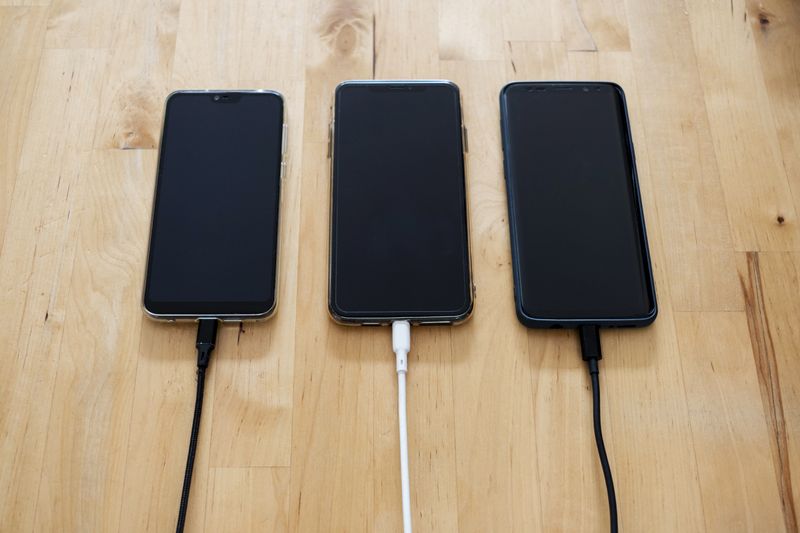
A device drawing little current barely notices a resistive cable, while one drawing several amps is limited by it immediately. Devices also differ in how aggressively they respond to a sagging input, with some backing off far earlier than others. A cable that carries data perfectly may still be a poor power conductor, because data needs signal quality rather than thickness.
Mechanically, long cables sold for convenience are frequently thin for flexibility, which is exactly the wrong trade for charging. Comparing charge times with a short cable and a long one is a practical test that needs no instruments at all.
Implementations differ, and vendors are not obliged to document the differences.
What actually helps
Using the shortest cable that reaches removes resistance directly and costs nothing, which makes it the first thing to try. Cables rated for higher current contain thicker conductors, and that rating is the only reliable external clue to what is inside.
Mechanically, cleaning a socket carefully with a non-metallic tool restores contact area and frequently fixes a charge that had grown slow. Replacing a cable that has been repeatedly bent at the connector addresses the most common location of internal damage. If a cable only works at one particular angle, conductors inside are already broken and the strands still connecting are carrying everything.
Everything above, in order of what to do first
- Copper is not a perfect conductor. Every metre of wire has resistance, and resistance multiplied by current gives a voltage that is lost between the two ends.
- Why the loss matters more at low voltage. A fixed voltage drop is a much larger fraction of a low supply voltage than of a high one, which is simple arithmetic.
- The lost energy becomes heat. Power dissipated in a conductor equals the current squared multiplied by the resistance, so doubling current quadruples the heating.
- Connectors are resistors too. Current passes through a mechanical contact at each end, and the resistance of that contact depends on pressure and cleanliness.
- Why the same cable behaves differently on two devices. A device drawing little current barely notices a resistive cable, while one drawing several amps is limited by it immediately.
- What actually helps. Using the shortest cable that reaches removes resistance directly and costs nothing, which makes it the first thing to try.
The takeaway
Shorter and thicker beats anything printed on the packaging.
Understanding the failure mode tells you more than the feature list does.
Questions readers ask
Are expensive cables faster?
Only if they contain thicker conductors and the correct identification for higher current. Price alone tells you nothing about either.
Does a long cable damage my device?
No. It reduces the voltage arriving, so the device simply draws less current and charges more slowly than it otherwise would.