Power & Batteries
What happens when a lithium cell fails, and what to do about it
Thermal runaway is a self-sustaining reaction rather than a fire in the ordinary sense, and that changes how it should be handled.

Treat the sections below as a sequence. With battery failure, getting the early decisions right makes the later ones much easier.
Before you start
- Damage or defect causes an internal short, which generates heat.
- Above a threshold the cell produces its own heat faster than it loses it.
- Swelling is a warning sign and the device should be retired immediately.
The failure begins as a short circuit
A lithium cell holds a great deal of energy separated by a thin polymer separator, and puncturing, crushing or manufacturing contamination can breach it. Current then flows internally through the breach, generating heat in a very small volume. Metallic lithium deposited by charging when cold or too fast can grow structures that pierce the separator over time, producing the same result with no external damage.
This is why a cell can fail weeks after the abuse that caused it.
Runaway is a feedback loop
Above a threshold temperature the cell materials begin decomposing exothermically, producing more heat than the cell can shed. That raises the temperature further, accelerating the reaction, which is why the process is called thermal runaway. Some cathode chemistries release oxygen as they decompose, which allows the reaction to sustain itself without air.
That is the reason smothering is ineffective and the reason iron phosphate chemistry is considered safer.
Cooling is the intervention, not smothering
Because the reaction supplies its own heat and in some chemistries its own oxygen, removing air does little. Large volumes of water are effective mainly as a heat sink, cooling adjacent cells enough to prevent propagation.
At the protocol level, fire services train specifically for this and treat it as a chemical fire with a long re-ignition risk. A pack that appears extinguished can re-ignite hours later as heat migrates to cells that had not yet reacted.
Warning signs worth acting on
Swelling is the clearest: gases produced by internal decomposition inflate the cell, lifting screens, separating cases and jamming trackpads. Unusual heat while idle, rapid unexplained capacity loss, or a device that will not hold charge are weaker but real indicators. A dropped device that subsequently behaves oddly around charging deserves suspicion even if it looks intact.
Any of these means stop charging it, stop carrying it, and arrange disposal.
Handling and disposal
Do not puncture, crush or attempt to prise out a swollen cell, and do not put it in general waste or in a domestic bin. Battery fires in waste collection vehicles and recycling facilities are a documented and growing problem worldwide caused by exactly this. Most countries have designated collection points for batteries and electronics, and many retailers accept them.
Store a suspect device somewhere non-combustible and away from anything flammable until it can be handed in.
Reducing the risk in the first place
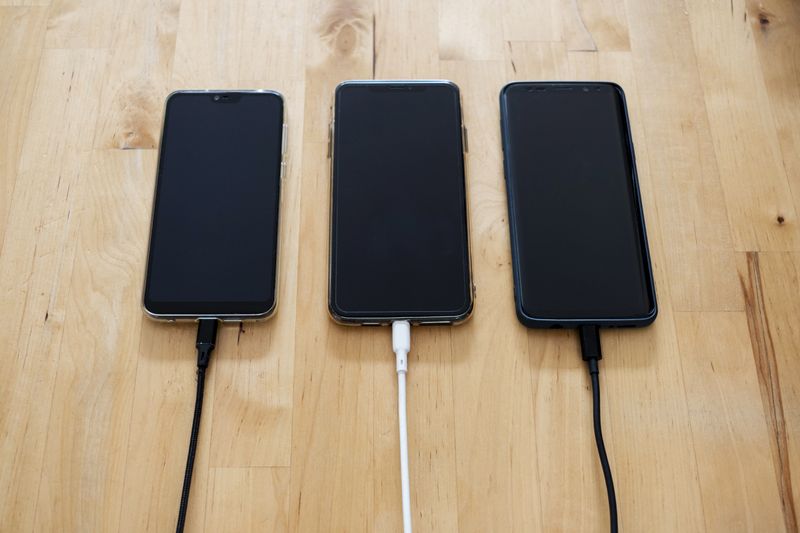
Use certified chargers and cables, since inadequate regulation is a common precipitating factor. Avoid charging in bed, under pillows or on soft furnishings where heat cannot escape.
In practice, avoid extreme temperatures, and never charge a cell that has been cold-soaked until it has warmed. Buy replacement cells from reputable sources, because counterfeit cells with no protection circuitry are widely sold and indistinguishable by appearance.
The takeaway
Swelling means stop. The reaction feeds itself, so prevention is the only reliable control.
Once you know what it is trading away, the design stops looking arbitrary.
Questions readers ask
My phone case is bulging slightly. Is that urgent?
Yes. A swollen cell is producing gas from internal decomposition and should be taken out of service and disposed of properly rather than used until convenient.
Can I put an old battery in the bin?
No. Batteries in general waste are a leading cause of fires in collection vehicles and sorting facilities. Use a designated collection point, which most countries and many retailers provide.
Also by Junko Ishida
- USB-C solved the connector and not the confusionPower & Batteries
- File formats decide whether your files outlive the softwareSoftware
- Where the electricity goes when everything is switched offPower & Batteries
- The memory effect was real, and it has nothing to do with your phonePower & Batteries