Devices
Where a phone hides its antennas, and why your hand is part of the circuit
The metal band around the edge is not trim. It is a set of radiating elements, and the gaps interrupting it are the design.
Comparisons of phone antenna design usually pick a winner. This one picks the circumstances, which is more useful.
The difference in one place
- The insulating gaps in a metal frame separate one loop into several antennas.
- Tissue absorbs and detunes, so grip changes efficiency measurably.
- A weak signal drains the battery because the phone transmits at full power.
An antenna wants length a phone does not have
Radio efficiency depends on the antenna being a sensible fraction of a wavelength, and the wavelengths phones use are measured in tens of centimetres. No pocket device can carry a straight quarter wave for the lower bands, so the antenna is folded, bent and wrapped around the chassis.
Folding works, but it narrows the usable bandwidth and makes the antenna far more sensitive to whatever material happens to sit nearby. This is why the shape of the case, the position of the battery and the routing of flexible cables all change how well a phone receives. The engineering target is never perfection but an acceptable compromise across many bands inside a volume that keeps getting smaller.
The metal frame is the antenna
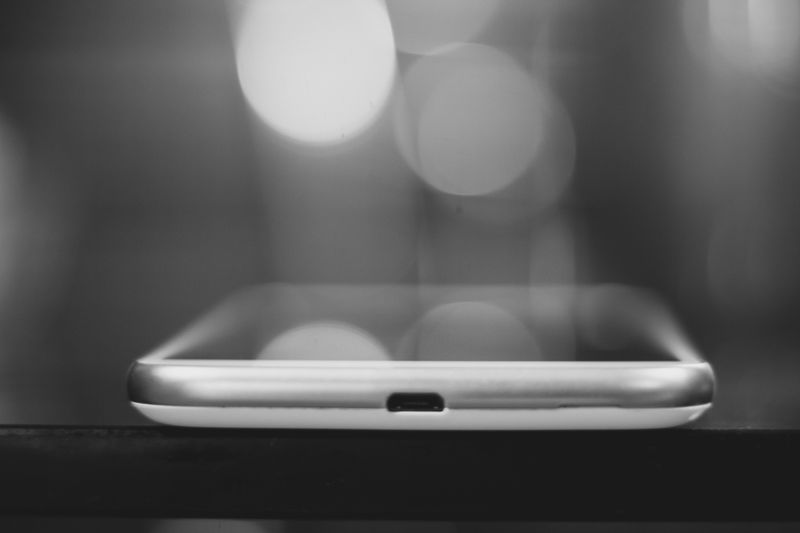
Modern phones use the metal band around the edge as radiating elements, divided into segments by small insulating gaps in the metal. Those thin lines interrupting the frame are not decoration; they are the breaks that turn one continuous loop into several separate antennas. Each segment is fed at a chosen point and tuned by components that switch in and out as the phone changes band or channel.
Bridging a gap with something conductive, such as a metallic sticker or an extremely tight metal grip, effectively shorts the segments together. When that happens the antenna is no longer the shape it was designed to be, and its efficiency falls immediately and substantially.
Your hand is part of the circuit
Human tissue is mostly water, which absorbs radio energy and also loads the antenna electrically because the body is a lossy conductor. Holding a phone shifts the antenna resonance, so the tuning that was correct on the test bench is no longer correct in your palm.
Phones carry tunable matching networks that measure the mismatch and adjust components in real time to pull the antenna back towards range. Even with that correction, a firm grip across a lower gap can cost a large share of the power the phone is trying to transmit. This is why a weak signal often improves when you change grip rather than when you walk twenty metres closer to a window.
Many radios, and nowhere to put them
A phone runs cellular across several bands at once, plus wireless networking, short range audio links, satellite navigation and usually a payment coil. Several must transmit and receive simultaneously, so antennas are shared through filters that separate the bands and keep transmitters out of receivers.
Mechanically, cellular reception uses multiple antennas together, combining copies of one signal that arrived by different paths to recover the data reliably. That technique needs the antennas physically separated, which is awkward in a device whose longest dimension is shorter than a wavelength.
The compromise shows up as bands that perform noticeably better than others on the same handset, for reasons buried in the internal layout.
The phone decides how loudly to shout
Transmit power is not fixed; the network instructs the phone to use the minimum that keeps the link reliable, which saves power at both ends. In a weak signal area the phone transmits near its limit continuously, which is why poor coverage drains a battery faster than heavy use does. Regulations cap how much energy the body may absorb, so phones use proximity sensing to detect a hand or head and reduce power accordingly.
Those sensors explain why a phone lying on a table can report a slightly different signal reading than the same phone held in mid air. None of this changes the strength of the tower signal reaching you, only what your own transmitter is permitted to send back upward.
Firmware updates change this behaviour more often than hardware does.
What actually improves reception
Signal bars describe received strength crudely and say nothing about congestion, so a full display can still deliver an unusable connection. Moving a few metres often matters more than moving a few hundred, because reflections create standing patterns with strong and weak spots.
Height helps because it clears nearby obstructions, which is why reception on an upper floor is frequently better than at ground level. A window helps not because glass is transparent to radio but because it is thinner and less reinforced than the wall surrounding it. Metallised energy-efficient glazing reverses that advantage, since the thin metal coating that reflects heat also reflects radio waves back outside.
Side by side
| Consideration | What it means in practice |
|---|---|
| An antenna wants length a phone does not have | The insulating gaps in a metal frame separate one loop into several antennas. |
| The metal frame is the antenna | Tissue absorbs and detunes, so grip changes efficiency measurably. |
| Your hand is part of the circuit | A weak signal drains the battery because the phone transmits at full power. |
The takeaway
The gaps in the frame are the antenna; cover them and you have changed the radio.
The constraint is almost always physical, and marketing rarely mentions which one.
Questions readers ask
Do metal cases hurt reception?
They can, particularly if the metal sits directly over the frame gaps or contacts them. Cases with a metal frame of their own are the riskiest.
Why does my signal improve when I put the phone down?
Removing your hand restores the antenna tuning and stops your body absorbing energy. Proximity sensing may also allow a higher transmit power.